Wednesday, May 5, 2010

Fighting Terrorism

One of my favorite new sources of information is a site called "Barking up the wrong tree," which appears to be written by someone who spends all his time looking through recently published research and abstracts to report to us, as he says, "just the interesting stuff." He recently reported from the Copenhagen Census on the subject of whether it is worth it to combat terrorism with anti-terrorism measures:

Three of the five “solutions” proposed here – business-as-usual, increased proactive responses, and enhanced defensive measures – have very adverse benefit-cost ratios under a wide range of scenarios, even when the most promising assumptions are invoked. The most effective solutions are the cheapest, but they must overcome the greatest obstacles that require either greater international cooperation or more sensitive and farsighted policymaking. Such qualities seldom characterize rich countries’ actions.

It's been my suspicion that the best way to react to acts of terrorism is to treat it like a natural disaster (and no, oil rig explosions don't count as "natural"). We should react quickly and maturely to help those in need and repair any damage done, but any large-scale response demonstrating fear of terrorists tends to justify that method of getting one's point across – and is also about as effective as attempting to stop all earthquakes or hurricanes.

It's possible the metaphor could extend further – that, much like we could look at global climate issues that could elevate the frequency and severity of hurricanes, if we are serious about reducing terrorism, we should look at global economic (and religious?) issues that could lead people to consider drastic methods to change their lot in life.

Some pretty imporant information regarding the disaster in the gulf

The WSJ reports that the flow of oil could have been cut off via the use of an acoustic trigger system that the rig in question lacked. The cost of the trigger would have been merely $500k (which you can compare to the rig's replacement cost at 560 million, or the billions that would be required for clean up of the disaster (which will probably not include billions more in undocumented externalized costs)).

William Galston of the New Republic documents some of the reasons why the rig might have lacked it. It wasn't required, and the Minerals Management Service (a division of the Interior Department) had experienced a shift in their policy recommendations between 2000 and 2003 regarding whether it should be required for every rig. If the insinuation is unclear or unpresumed, they previously advocated the requirement for each rig to be a regulation, later they thought they maybe the cost was a little too much.

I found the following particularly revelatory:

After the Bush administration took office, the MMS became a cesspool of corruption and conflicts of interest. In September 2008, Earl Devaney, Interior’s Inspector General, delivered a report to Secretary Dirk Kempthorne that has to be read to be believed. One section, headlined “A Culture of Ethical Failure,” documented the belief among numerous MMS staff that they were “exempt from the rules that govern all other employees of the Federal Government.” They adopted a “private sector approach to essentially everything they did.” This included “opting themselves out of the Ethics in Government Act.” On at least 135 occasions, they accepted gifts and gratuities from oil and gas companies with whom they worked. One of the employees even had a lucrative consulting arrangement with a firm doing business with the government. And in a laconic sentence that speaks volumes, the IG reported: “When confronted by our investigators, none of the employees involved displayed remorse.”

Galston conjectures the administration's role, "What we do know is that unfettered oil drilling was to Dick Cheney’s domestic concerns what the invasion of Iraq was to his foreign policy – a core objective, implacably pursued regardless of the risks."

Thanks, guys.

Wednesday, April 28, 2010

Trucks v. Bicycles


Will trucking in the United States suffer because Ray LaHood wants to focus on alternate transportation? Should it?

The Infrastructurist pulls from the American Trucking Association Blog:

Economic catastrophe aside, the trucking industry’s argument centers around the use of TIGER funds, which they worry will be diverted to new bike lanes instead of projects with “national importance” (aka highways). “Secretary LaHood’s comments suggest that an important sector of our economy will suffer in order to boost bicycling and walking, which always will be overwhelmingly recreational pursuits,”

Yes, it seems impractical that bicycles will ever be the medium of transporting large-scale freight. But to argue that they will always be recreational pursuits ignores quite a bit about the sustainability of our current infrastructure. Predictions are now that the US oil surplus will disappear in 2 years and global shortages will occur in 5. No, giving a little focus to bicycles is not a replacement for freight, but it is certainly a demonstration of a little bit of wisdom to have a little bit of infrastructure in place for when driving can no longer be supported as a primary form of transportation.

The ATA's real concern (which they conflate with the concern about bicycling) is that the DOT's policy will "shift more freight to barges and rail." Is there any reason aside from the short-term employment effect not to make this switch? Our economy is largely dependent on trucking freight today because of lobbying by GM and the energy industry in the postwar period – because if we have to drive cars and trucks on highways to get around rather than take trains, they make more money – not because it's any demonstration of market efficiency.

If it seems dismissive to refer to the lag in the trucking industry as "short-term unemployment," I would refer you first to the broken window fallacy before then additionally suggesting that if a lot of freight is diverted to barges and rail, would not most of the required labor also be diverted? That industry could then have greater revenue to spend on employees, since much will be saved by shifting toward energy efficiency.

Monday, April 26, 2010

What a Toothless Climate Bill.

No wonder it has bipartisan support. From Mother Jones:

  • The bill would remove the Environmental Protection Agency's authority to regulate carbon dioxide under the Clean Air Act, and the states' authority to set tougher emissions standards than the federal government.

  • There will be no fee—or "gas tax"—on transportation fuels. Instead, oil companies would also be required to obtain pollution permits but will not trade them on the market like other polluters. How this would work is not yet clear.

  • Agriculture would be entirely exempt from the cap on carbon emissions.

  • Manufacturers would not be included under a cap on greenhouse gases until 2016.

  • The bill would provide government-backed loan guarantees for the construction of 12 new nuclear power plants.

  • It will contain at least $10 billion to develop technologies to capture and store emissions from coal-fired power plants.

  • There will be new financial incentives for natural gas.

  • The bill would place an upper and lower limit on the price of pollution permits, known as a hard price collar. Businesses like this idea because it ensures a stable price on carbon. Environmental advocates don't like the idea because if the ceiling is set too low, industry will have no financial incentive to move to cleaner forms of energy.

  • The energy bill passed by the Energy and Natural Resources Committee last year will be adopted in full. This measure has sparked concerns among environmentalists for its handouts to nuclear and fossil fuel interests.


  • Agriculture is exempt? "Manufacturers" are temporarily exempt? Oil companies are regulated in a separate market? That doesn't leave much. What about when agricultural industries buy from oil companies? This seems to leave loads of room for loopholes.

    I suppose there's a tough line between what is politically feasible for progress and what is ideal. I would think that a flat carbon tax or 100% auctioned carbon permits (if a cap-and-trade system must be used – but it seems that this is even mere terminology to appease free-market mindset at times) would be the least bureaucratic way to go about it, and also the most productive. Make people internalize the damage they do to the planet in the price. It's also the one that would carve deepest into the energy industry's profits. Thus, both parties support a bill that does next to nothing.

    Thursday, April 22, 2010

    I will save up for that cheeseburger.

    Not only to we fail to charge for the destruction of natural resources, we actually pay you to do it instead, with discounts funded by the government:
    Two hundred dollars for a hamburger. A gallon of gasoline, $15. The price of clothes: double. Milk, $6 a gallon. These are what things would really cost without subsidies, according to some estimates.

    Tuesday, April 6, 2010

    Three-fer, er, Four-fer

    New research gives us a little bit of a problem for the presumption that we behave rationally in economic thinking. Think of this when people argue that increasing agricultural regulation is stripping our freedom of choice.

    I had a religion professor in College who used God's instructions for distribution of Manna as an argument that God is a socialist.

    When Dan Gilbert wrote his iteration of "the Sentence' – the one that starts with "Humans are the only animal that..." – he predicted he would someday be proved wrong. His assertion, that only humans think about the future, was (satirically) challenged.

    Also, I think it's safe to say I'll be doing this in the Fall.

    Thursday, April 1, 2010

    Take that, LaHood detractors.

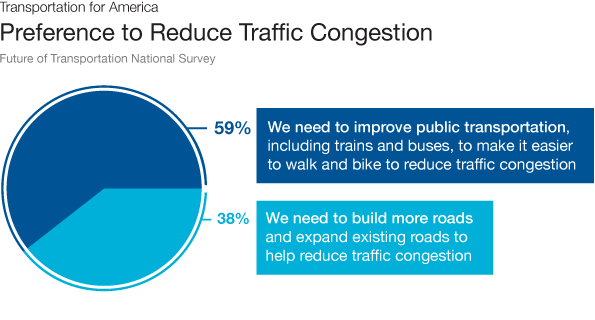
    I try to avoid (unsuccessfully) the practice of reposting without comment, so let me at least point out that LaHood should feel vindicated in his assertion that "this is the end of favoring motorized transportation at the expense of non-motorized."

    Source: Smart Growth America